Inside an Alcantara-Lined Bag: What LVMH's Deadstock Means for You
Open any luxury handbag and the lining is usually an afterthought. A piece of dyed cotton, a sheet of synthetic, a glossy polyester that scratches. The outside gets the photography; the inside gets the budget cut.
This is the part of a bag I think about most.
The lining is where a brand reveals itself
A leather bag is, structurally, two materials in conversation. The outer shell carries the silhouette, the colour, the brand. The lining carries everything else — your phone, your card holder, the weight of a day's small movements. It touches your hand more often than the outside does. It wears first.
Most luxury houses know this. Most of them still cut corners on it.
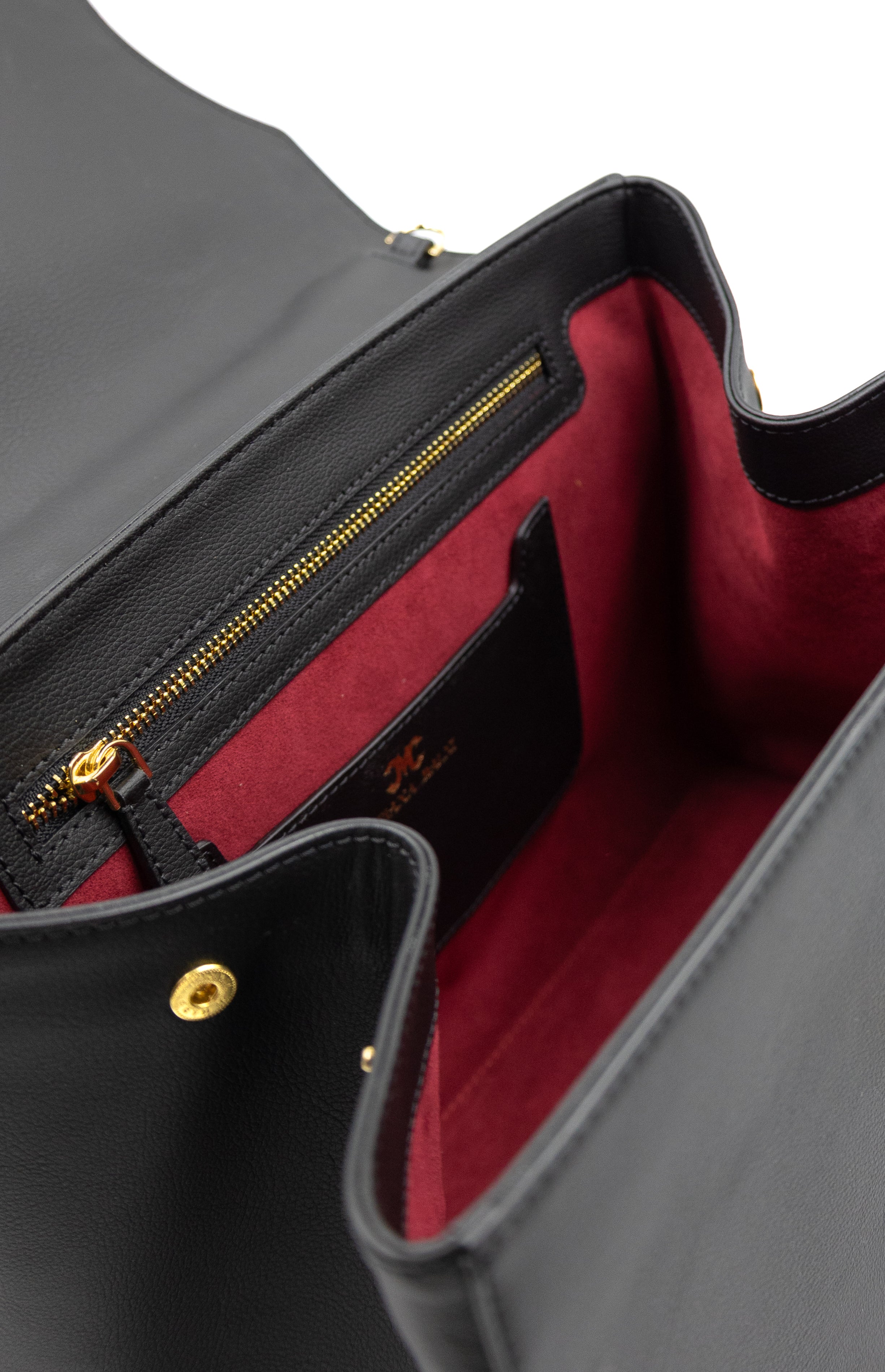
At Mariana Malni, every bag is lined with Alcantara® microfibre — a material more familiar to interiors of high-performance cars and yachts than to handbags. We source it through Nona Source, LVMH's certified deadstock platform in Paris.
That sentence carries a lot. This article unpacks what it actually means.
What is Alcantara, and why use it in a bag?
Alcantara® is an Italian-made microfibre developed in the 1970s and refined for decades since. It is technically not a fabric — it is a composite of ultra-fine polyester and polyurethane fibres bonded into a velvet-like surface. It is breathable, stain-resistant, lightweight, and pleasant to the touch in a way that synthetic linings rarely are.
The interiors of a Bentley, a Lamborghini, a Rolls-Royce sailing yacht — these are lined with Alcantara. So are the seats of Premiership football stadium hospitality suites and the dashboards of Italian-design helicopters. The material is associated with quiet, considered luxury — the kind that does not announce itself, but reveals itself the moment you touch it.
Bringing Alcantara into a handbag lining is unusual. It is also expensive. Most contemporary bag brands at our price tier use a printed cotton or a viscose-poly blend. We made a different choice early — and we made it because of what the material does for a bag's life across years, not weeks.
What Nona Source is, and what 'deadstock' actually means
Nona Source is a platform launched by LVMH in 2021 to sell verified, leftover fabrics from the group's maisons — Louis Vuitton, Dior, Givenchy, Loewe, Celine, Fendi, and others.
Deadstock is a textile industry term for material that was produced for a season or collection but never used. In the conventional luxury supply chain, deadstock has a quiet ending: it gets incinerated, landfilled, or sold off cheaply to outlets that mix it into anonymous bulk inventory.
LVMH's decision to create Nona Source was a recognition that this is wasteful at a scale most consumers never see. A single LVMH maison can hold tens of thousands of metres of unused, perfectly-finished fabric at any given time. Nona Source catalogues that inventory, certifies its origin, and makes it available to smaller designers and emerging houses who otherwise could not access materials of that quality at workable minimums.
When we source Alcantara through Nona Source, we are not buying a generic textile. We are buying a specific batch — manufactured to the standards of a maison whose name you would recognise — that would otherwise have ended its life as waste.
What this changes about the bag in your hand
Three things, in order:
Material specification. The Alcantara in your Mariana Malni bag was produced to the tolerances of LVMH. The colour fastness, the weight, the hand-feel — all of it has been pre-qualified to a standard most independent brands cannot afford to require.
Carbon footprint. The lining of your bag is carrying near-zero new-production environmental cost. The fibres were already made. The dyeing was already done. The shipping from mill to maison already happened. By giving this material a second life, the bag avoids the energy, water, and emissions of producing virgin textile.
Provenance. Every Alcantara batch we use is traceable. We know the maison it came from. We know the season. We know the colour run. This is a level of supply chain documentation that handbag buyers rarely see, and it is one of the reasons we can speak about sustainability with specificity rather than slogans.
Why circularity matters more than 'eco-friendly'
The fashion industry has spent ten years getting comfortable with words like 'sustainable,' 'eco,' 'conscious,' and 'green.' Most of these words mean nothing now. They have been used to sell so many different things — some genuinely better, some marginally better, some not better at all — that the consumer is right to be tired of them.
Circularity is a more precise idea. It asks a specific question: what happens to the material at every stage of its life, including the stages before and after you own the bag?
For the lining of a Mariana Malni bag, the answer is documented. The Alcantara was made once. It was earmarked for one luxury maison. It went unused. It was catalogued, verified, and brought back into use by a smaller brand. It became part of a bag that will be carried for years. At end of life, the bag itself can be disassembled, the leather composted or returned, the lining recycled within the existing Alcantara stream.
This is not a marketing position. It is how the material moves through the world.
The full material story of a Mariana Malni bag
Alcantara is one piece of a longer story. Every bag in our collection is built on the same logic of considered material sourcing:
- Italian leather line: LWG Gold-certified Tuscan leather, produced in tanneries audited annually for water, energy, and chemical standards. Read more on our Italian Leather Craft page.
- VEGEA grape leather line: Patented by Vegea S.r.l. in Milan, made from wine industry waste, PETA-Approved Vegan. Read more on the VEGEA Story page.
- Alcantara lining: Sourced via Nona Source, LVMH's certified deadstock platform in Paris.
- Crafted in the UAE by our long-term production partner, Cuoio Italian Leather Industry, under Italian craft direction.
A bag is the sum of its decisions. Each material here was chosen for a reason that holds up to questioning. None of it was chosen because it sounded good in a press release.
What to look for in any luxury handbag lining
If you are reading this and considering any luxury bag — not only ours — these are the four questions worth asking:
- What material is the lining made of? If a brand will not tell you, that is the answer.
- Is the material certified or branded? Generic descriptions like 'fabric lining' or 'luxury textile lining' usually mean an undifferentiated bulk material.
- Where was it sourced? Provenance documentation is a sign that a brand takes the supply chain seriously.
- What happens to it at end of life? Recyclable, returnable, compostable — or destined for landfill?
The outside of a luxury bag sells you the brand. The inside tells you whether the brand is real.
Mariana Malni handbags are designed in Dubai and crafted in the UAE under Italian craft direction. Every bag carries an LWG Gold-certified Italian leather or PETA-Approved VEGEA grape leather outer, an Alcantara® microfibre lining sourced through Nona Source (LVMH, Paris), and hand-finished hardware. Explore the collection.

Written by Mariana Malni